

De-risking longevity - Why it matters
Article information and share options
Our world is growing older
In 2018, for the first time in history, persons aged 65 or above outnumbered children under five years of age globally. The number of persons aged 80 years or over is projected to triple, from 143 million in 2019 to 426 million in 2050[1].
More people are entering retirement and in markets where Defined Benefit[2] plans were once more common and prevalent, longevity risks have become very real.
What is longevity risk?
Longevity risk refers to the potential risk attached to the increasing life expectancy of pensioners and the likelihood of their savings running out before death. While most Defined Benefit plan sponsors, trustees and governments are already familiar with longevity risk, managing this uncertainty of life expectancy and quantifying the required pension payments is not easy.
In a study conducted in 2019[3], assets in the 22 largest pensions markets increased by 15%, indicating an upward trend. In APAC, Australia is one of the largest pension markets, with assets as high as 151% of GDP. Even with AUD 300 billion in its Defined Benefit reserves, the funds are now under threat as average life expectancy continues to increase.
Pension funds are therefore increasingly looking for ways to hedge longevity risk.
Hedging longevity risk with longevity swap
Defined Benefit plans and guaranteed lifetime pension plans are complex and come with risks. Capital markets have offered various solutions for Defined Benefit plans to offload these risks, including pension buy-outs, buy-ins, as well as longevity hedges. Of these, the longevity swap is considered one of the most effective and efficient tools used to hedge longevity risk.
Longevity swaps can protect plan sponsors from higher-than-expected pension payouts, giving them the peace of mind to focus on their core business activities. In addition, while longevity risks are transferred, plan sponsors can retain their assets and investment control.
Longevity solutions – successes at Swiss Re
Swiss Re has transacted more than 10 deals since 2015. The reinsurance transactions are driven by pension funds reinsuring their longevity risks. As pension funds look to hedge their risks, transactions are growing. In 2019 and 2020, £12bn and £24bn was reinsured respectively, moving the longevity risk away from the Pension Funds.
- In the UK and some European markets, Swiss Re has established structures and the experience can be replicated and transferred across regions
- In Singapore, Swiss Re partnered with NTUC Income on a first-in-market longevity arrangement
- In Australia, Swiss Re has won three tenders in the past 10 years and is looking to take on more longevity swaps
What is a longevity swap and how does it work
A longevity swap is a reinsurance structure where the superannuation fund (or client in this case) pays a fixed annual premium to the reinsurer plus an annual fee. The premium, which is agreed on and documented in a reinsurance treaty, equals to the expected annuity payment including a margin. The reinsurer pays the actual annuity payments, in the form of claims to the client, for as long as each pensioner lives.
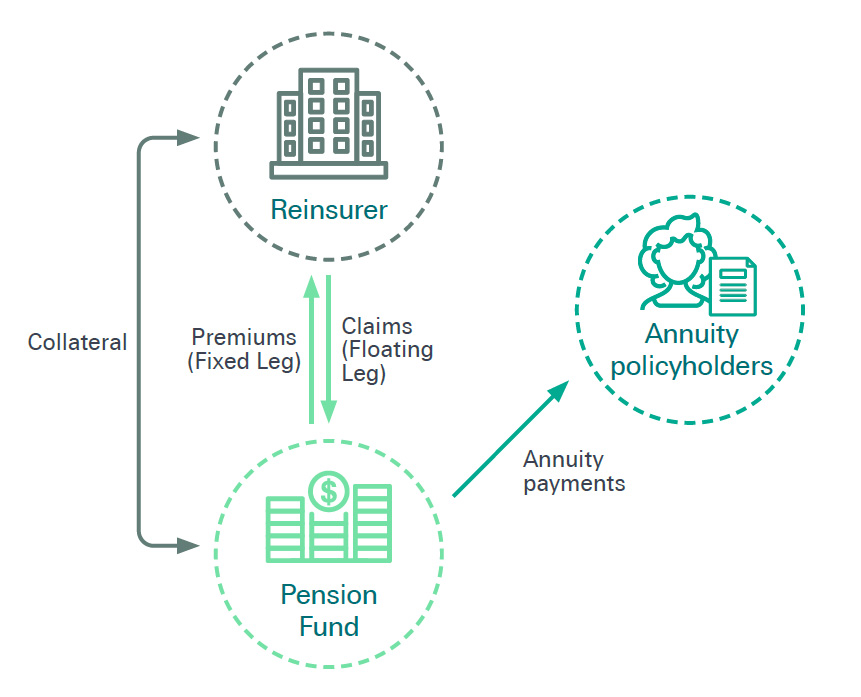
On a high-level, the fund managers transfer their longevity risks (and even admin, legal regulatory responsibilities) to the reinsurer. In turn, The reinsurer receives an agreed schedule of annual payments and in turn pays the fund manager the total annuities paid to the members in that year. While it seems rather straight forward, there is of course due diligence to be done, structure to put in place, negotiation on the risks and responsibilities to be transferred, and so on.
As the world grows older and people live longer, there will be an increased focus on pension risk management. This is expected to drive the longevity swap market as increasing numbers of companies look to de-risk longevity and take advantage of the benefits offered by reinsurers.
[1] https://population.un.org/wpp/
[2] "Defined Benefit" is where a retiree is paid a monthly benefit linked to their average salary at retirement, with payments ceasing after their death.
[3] https://www.thinkingaheadinstitute.org/research-papers/global-pension-assets-study-2020/